
This post about the best age to teach a child to write contains affiliate links to amazon.com, which means I may receive a commission if you click a link and purchase something that I have recommended. While clicking these links won’t cost you any extra money, they will help me keep this site up and running. Thank you!
Are you wondering what the best age to teach your child to write is? Well, then wonder no more, because today we are going to discuss the diffrerent stages and activities that will help your little one to learn how to write and love it at the same time.
Before we start, please bear in mind that every child is different. So, the best age to teach them to write can vary depending on the their individual development and readiness. Basically, kids begin to show an interest in writing and develop the fine motor skills necessary for writing between the ages of 3 and 5. However, it is perfectly normal for little ones to go with their own pace. So, here is a rough guideline of what to expect, provide and do depending on your child’s age.
Pre-writing skills
When talking about the best age to teach your child to write, we just can’t skip teaching pre-writing skills. This usually happens when your little one is 2-3 years of age. At this stage, kids start developing the foundational skills needed for writing. Here is a list of suitable activities that you can do with your kid. All of them will help greatly for building hand-eye coordination and developing fine motor skills.
Scribbling
Scribbling actually means making spontaneous, unstructured markings. They are made while your little one explores differents writing utensils, such as crayons, markers, or pencils. They can do it on paper or other surfaces. These marks typically don’t have specific shapes or recognizable forms and are often random or abstract in nature. However, scribbling is a really important early stage of writing development. It is also a way for children to experiment with holding writing tools, develop hand-eye coordination, and express themselves creatively.
Don’t worry, over time, scribbling will turn into more controlled and purposeful drawing and writing. This will happen while your little one refines their fine motor skills and gain a better understanding of symbolic representation. And remember that the goal of scribbling is not to produce recognizable drawings or letters. It is to allow your child to freely explore and experiment with various writing tools and materials. So, make sure you encourage their curiosity, creativity, and sensory exploration. You should do it while they engage in this foundational stage of writing development.
Drawing
While you are wondering whether your child has reached the best age for you to teach them to write, you can always start with drawing. It is not only one of the most popular activities among children, but also a really beneficial one. There’s barely a child that doesn’t like drawing and it is known to support their cognitive, emotional as well as physical development.
What you need
Whether scribbling or drawing, here are the basics that you will need to provide:
Safe and Comfortable Space
Make sure you set up a designated area where your little one can draw comfortably. This could be on the floor or on an age appropriate desk. It is very important that the space is safe, well-lit, and equipped with age-appropriate materials.
Easy-to-Use Drawing Tools
Providing a wide variety of drawing tools is essential. They should be easy for children to handle. Choose crayons that are non-toxic and safe for your kid. Markers should be washable and easy-grip and colored pencils – suitable for toddlers. It is a good idea to consider chunky or triangular-shaped pencils for younger children to help them grip the tools more easily.
Quality Drawing Paper
Use good quality paper that can withstand children’s enthusiastic drawing efforts. Consider providing a mix of blank paper, coloring books, and sketch pads to cater to different preferences and skill levels.You can also consider a magnetic drawing board or this doodle board, so that you don’t need to buy paper every few days.
Freedom to Explore
And last but not least, encourage your child to explore their creativity and imagination freely. Avoid imposing strict rules or expectations on their drawings and allow them to experiment with different techniques, colors, and subjects.If possible, provide opportunities to share the drawings with others and display their artwork proudly. This could include hanging their drawings on a dedicated art wall, creating a digital gallery, or organizing art exhibitions for friends and family.
Emergent writing
If you are wondering what the best age to teach a child to write is, bear in mind that this second stage refers to kids ages 3-4. At this point kids start to understand that writing conveys meaning. They may begin to experiment with writing letters, often using scribbles or letter-like shapes. Encouraging activities that you can include at this stage are:
Tracing
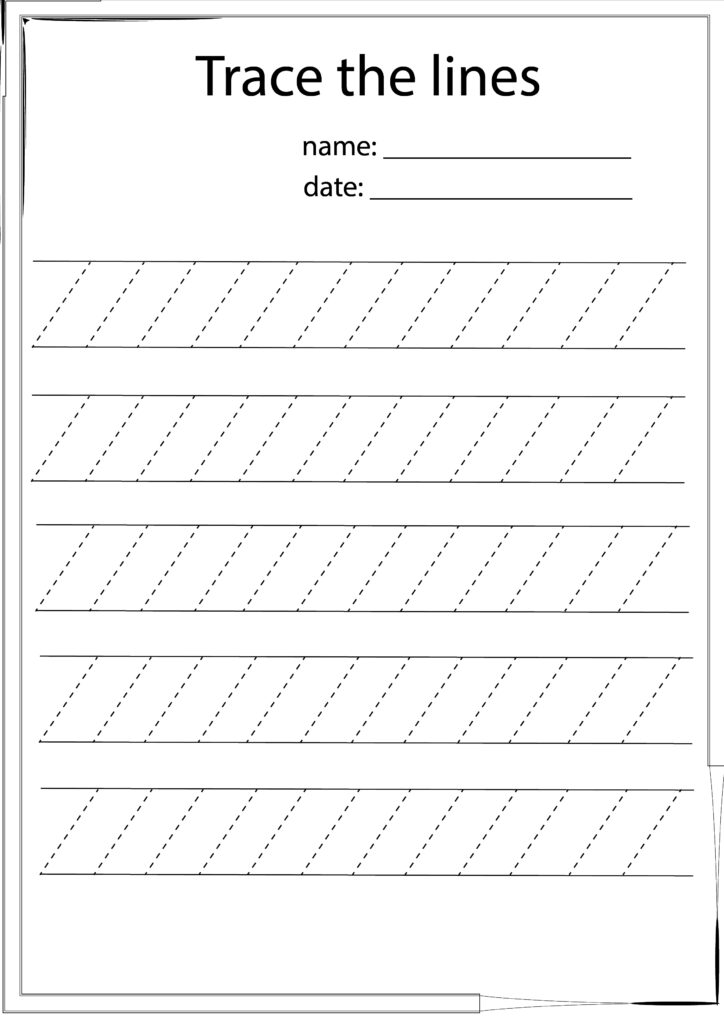
Tracing will provide your little one with a multitude of developmental benefits. It enhances fine motor skills, hand-eye coordination, and pre-writing abilities. By tracing shapes, letters, and objects, your child will improve their spatial awareness and letter recognition. Engaging in tracing activities also fosters creativity, imagination as well as language development. Moreover, successfully completing tracing tasks will boost confidence and cultivate focus and attention. These activities prepare children for school by laying the groundwork for academic success. Choose suitable tracing worksheets or workbooks that include prewriting practice or tracing letters. You can download some free ones from here or by clicking on the image below.
Forming basic shapes
This is another great activity that will help your child to develop their prewriting skills. What you could do is provide tracing worksheets or templates for each shape. Encourage your little one to trace over the lines of the shape multiple times, emphasizing correct formation and directionality. Once they are comfortable tracing shapes, encourage them to draw the shapes freehand. Make sure you offer praise for their efforts, even if the shapes aren’t perfect. You can download some free resources from here.
Letter formation
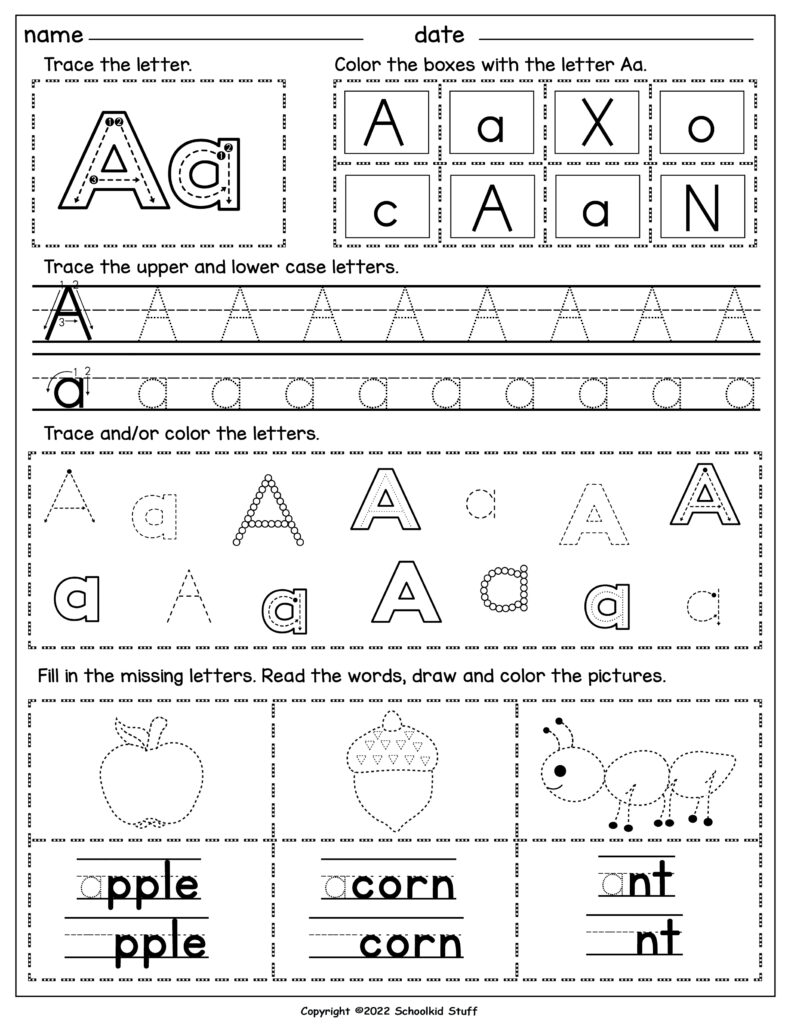
If prewriting skills have already been developed, then the best age to teach your child to write letters is 4-5. Around this age, children may show more interest in letter formation and attempting to write their name. Providing opportunities for them to practice forming letters correctly and recognizing the sounds associated with each letter can be beneficial. There are a number of resorces that can help you with this. For example, letter formation worksheets can be really beneficial as well as ABC books.
Early writing skills
And finally, at the age of 5-6 (by kindergarten age), your child will be ready to learn more about letter sounds, phonics, and basic spelling. They may start to write simple words and sentences, gradually refining their writing skills with practice and guidance.
You can find more free downloadable resources for practicing writing skills here.
And remember, it’s crucial to make writing activities enjoyable and engaging for children at every stage of development. Encourage creativity, provide plenty of opportunities for practice, and celebrate their progress along the way.